
We took the technology of smart buildings and scaled it down for mobile spaces
How it Works – Discover Innovative Heat Recovery for Vanlife
Uncover the unique technology and design that set our heat recovery systems apart, delivering efficiency and comfort for every adventure.


Efficient Energy Recycling
Maximize your van’s warmth by recapturing heat and reducing energy waste on the road.

Compact, Durable Design
Built to withstand rugged conditions while fitting seamlessly into limited van spaces.

User-Friendly Controls
Easily adjust settings for optimal comfort with an intuitive interface made for travelers.
- Improves efficiency and productivity
- Enhances user experience
- Reduces operational costs
- Provides scalability for future growth
- Increases accuracy and reduces errors
- Facilitates better decision-making
- Supports seamless integration with other systems
- Offers flexibility and customization options
How It Works
Discover how our heat recovery systems work and why they are necessary
What is Heat Recovery?
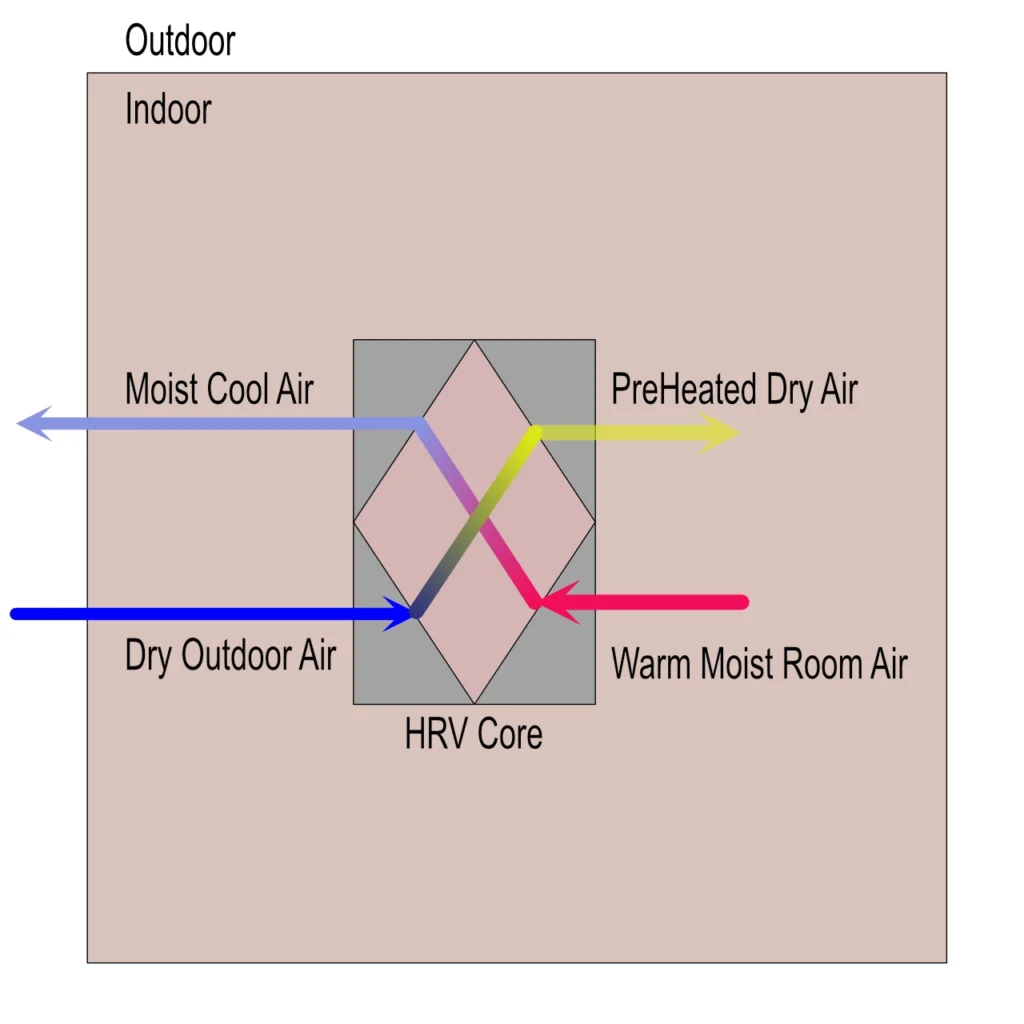
Heat recovery is performed in modern smart buildings (and houses) to make them more comfortable, safer and cheaper to heat/cool. The principle of modern construction is to insulate the structure as much as you can, seal the exterior to stop air and water vapor from travelling through, use forced ventilation (in and out) and finally, try to perform some heat recovery on the exhausted air. The energy recovery unit is basically a box that takes a controlled amount of air from inside, recovers all the heat it can out of the air before exhausting it outside and transfers the recovered heat to a controlled amount of outside air coming into the building.
This concept is replicated in all conditioned spaces that humans occupy.
There are many reasons why we want to exchange the air, especially in small spaces:
- CO2 levels elevate quickly in small spaces and prolonged exposure often leads to headaches and degraded mental capacity.
- Our breathing and cooking produce humidity that condenses on cold surfaces (glass and metal) which can rust vans and trucks from the inside out. Outdoor air has a low absolute humidity that wicks away moisture from warm humid spaces.
Ductless Heat Recovery (AKA Fixed Bed Recovery)
Ductless Heat Recovery works by installing heat recovery modules at opposite sides of a room. Modules alternate between heating and recovery modes at 1-2 minute intervals, working in tandem in opposing modes. The module in recovery mode is exhausting air and recovers waste heat from the air stream. The module in heating mode is transferring the stored heat into the fresh air entering the space.
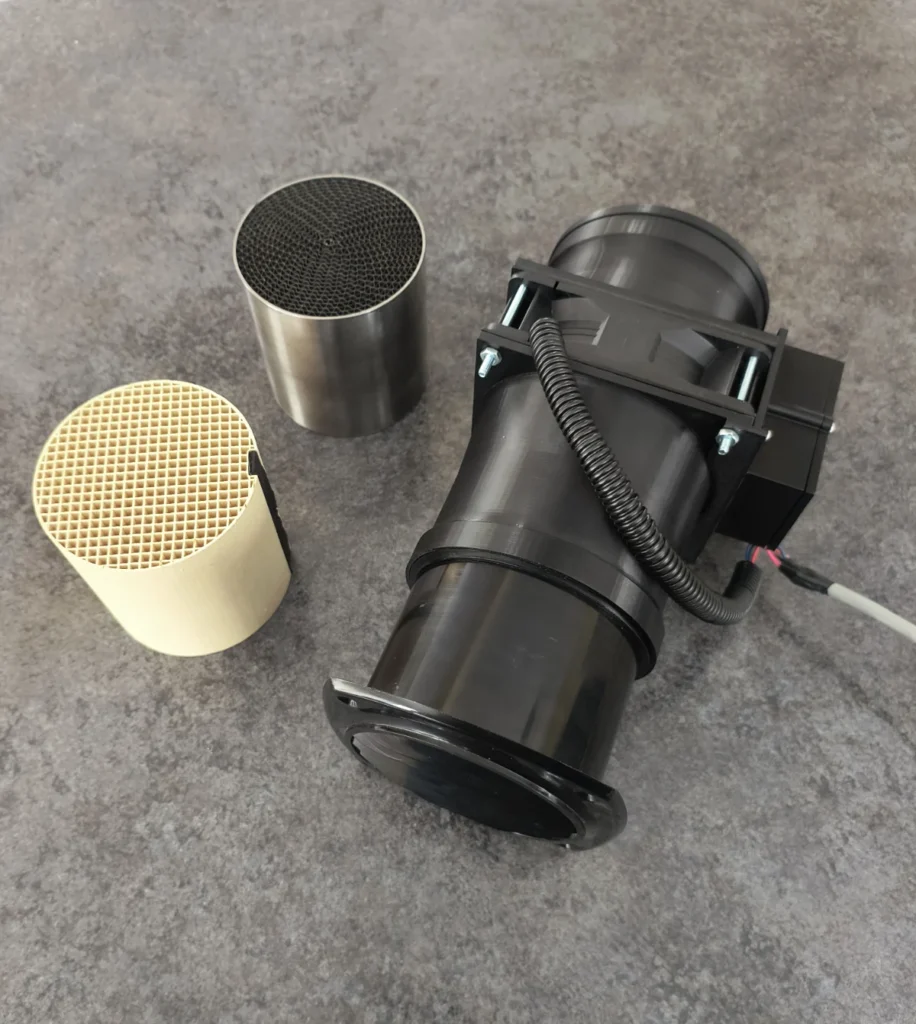
A module consist of a “core” device engineered to store sensible heat, a reversible fan with the appropriate flow and some engineered polymers.
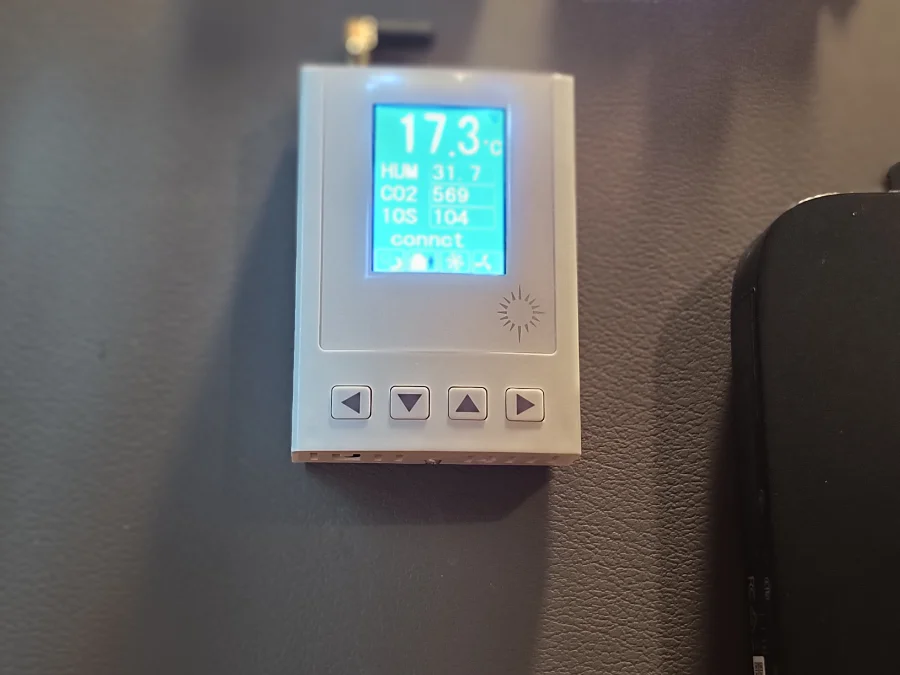
Smart buildings use a strategy called Demand Control Ventilation (DCV); Building Automation Controls measure the CO2 level in an occupied space and the building systems increase the amount of fresh air into the space as required. Our system performs the same function by measuring CO2 using a wall-mounted automation controller that increases the ventilation rates as required.
Why You Need Our Systems
Condensation Degrades Your Structure
Our systems bring in pre-heated dry air that is ready to wick moisture out of your space. Condensation is especially damaging in van applications where moisture is trapped between the insulated walls of the interior and the outside metal structure. Although spray foam is the gold standard for moisture control, it almost impossible to stop condensation on windows and above the headliner, cab and doors.
Even composite foam structures need to get rid of moisture, and the most recommended dehumidification method is simply ventilation.
Open Windows are Not Effective and Roof Fans are Wasteful
The introduction of lots of outdoor air isn’t the answer either. Bringing in lots of cold air makes your space cold. Although cold air is very dry, it doesn’t have the ability to pick up moisture until it is heated. Once the air is heated it can pick up moisture, but it needs to be exhausted outside with a fan or it will just condense on the walls and windows.
Roof fans move too much air, even at low speed settings. Even when you have them set up to move the right amount of air, they are sucking out your heat, because heat rises in your van. Further, how do you know what the right amount of air is? Your needs for fresh air change based on your activity level.
The biggest disadvantage of both of these methods is that they don’t recover any heat. They make your heating system work harder than ever, only to lose most of the heat to the outside.
When you use heat recovery you save heating fuel on your diesel and propane heaters. When you don’t need heating you don’t need to run the large circulation fans that consume battery power. When you use heat recovery, you can be comfortable longer into the fall without turning on the heat.
Where our Systems Make Sense
- You have a 3 or 4 season van, truck camper or recreational vehicle and you want to improve comfort and fuel efficiency.
- Your business requires a mobile field office, command post or research station where you need to maintain a warm, efficient environment with good Indoor Air Quality (IAQ).
- You own a small liveaboard boat and you want to increase comfort and control humidity levels.
- Highway tractor trailers parked overnight circulate stale, moist air through the cab while parked all night at rest stops. Driving teams of up to 2 people occupy a cab, elevating CO2 levels through the nights, which can degrade mental capacity the next day.